
A few days ago, just before returning to Shenzhen, I visited the editorial office of CQ Publishing in Tokyo.
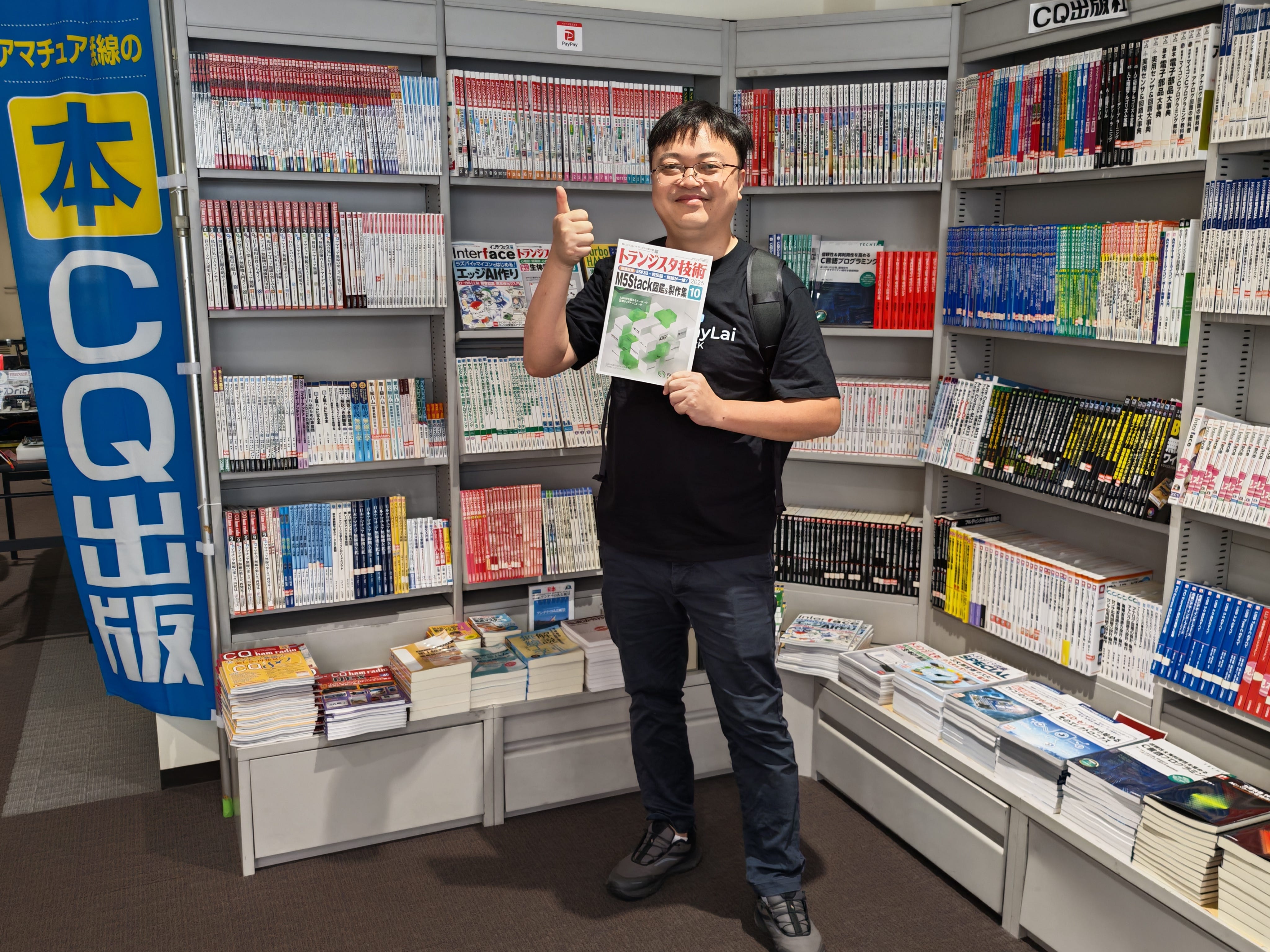
There, I saw something that made me stop for a moment: an upcoming issue of Transistor Gijutsu with more than 130 pages dedicated to M5Stack.
For people outside Japan, the significance of this may not be immediately obvious.
Transistor Gijutsu — literally “Transistor Technology,” and often known simply as Toragi among Japanese engineers — is one of Japan’s best-known electronics engineering magazines. Published by CQ Publishing, it has been read for generations by electronics engineers, embedded developers, students, radio amateurs, and hardware enthusiasts.
It is not a general technology magazine. Its pages are filled with circuits, measurements, microcontrollers, sensors, embedded programming, PCB design, and detailed explanations that engineers can actually use.
So when a magazine like this devotes well over 100 pages — more than 130 pages — to M5Stack, I think it represents something more interesting than simply getting media coverage.
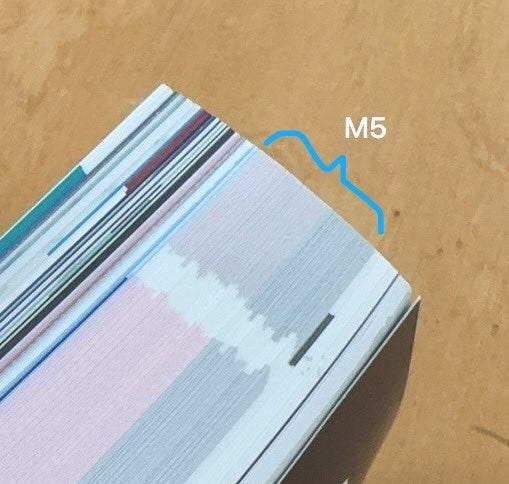
It says something about how M5Stack itself has changed.
I remember when M5Stack was much smaller
I have been following M5Stack since its early days in Shenzhen.
At first glance, the original idea was easy to understand: put an ESP32, display, buttons, battery, and expansion interfaces into a compact enclosure, and make it easier to build things.
But what happened afterward was much more interesting.
M5Stack did not remain a single development board.
Around the Core devices came Modules, Units, sensors, communication interfaces, accessories, programming tools, documentation, examples, and eventually many different form factors such as Stick, Atom and Stamp.
Developers could start with something small and then combine different pieces as their project evolved.
That distinction matters.
A successful development board is a product.
A collection of hardware, software, documentation, peripherals, distribution, community knowledge, and developers who continuously build new things on top of it starts to look more like a platform.
And I think that is what happened to M5Stack.
Japan became an important part of that story
Japan has been particularly interesting to watch.
Japanese electronics culture has a long tradition of people actually building things: professional engineers, university laboratories, technical schools, industrial developers, hobbyists, and the Maker community overlap in ways that are sometimes difficult to explain from outside the country.
M5Stack fitted surprisingly well into this environment.
It was accessible enough for beginners to make something quickly, but it was not limited to beginner projects. The same ecosystem could also be used for prototypes, measurement devices, factory tools, research projects, proof-of-concept systems, and eventually commercial applications.
This is something I have been observing not only as someone involved in the hardware and Maker communities in Shenzhen and Japan, but also through my academic research.
My research uses the term “developer-centric hardware” to describe an approach in which developers are not simply customers at the end of a conventional product-development process. Instead, they become part of the process through experimentation, prototyping, integration, modification, and eventually adoption.
M5Stack has become one of my main cases for studying this phenomenon.
And that is why this magazine issue caught my attention.
130 pages require an ecosystem
It is relatively easy to write a few pages introducing a new development board.
You can explain the processor, memory, display, interfaces, and show a sample program.
But producing more than 130 pages of practical engineering content about one hardware family is different.
There need to be enough devices to discuss.
There need to be enough applications to build.
There need to be enough technical knowledge to teach.
And, most importantly, there need to be enough developers who actually have something interesting to do with the platform.
In that sense, the size of this Transistor Gijutsu special is itself interesting.
It is not a quantitative measure of ecosystem success, of course. But it is a very visible sign of something that has been happening gradually for years.
M5Stack has accumulated enough hardware, software, documentation, users, applications, and engineering knowledge that one of Japan’s established electronics publications can now construct a substantial technical special around it.
That would have been difficult to imagine when I first encountered M5Stack in Shenzhen.
This is also why I remain interested in Shenzhen hardware
There are already plenty of stories about Chinese hardware being fast, inexpensive, or rapidly improving.
I have been writing about Shenzhen for more than a decade, and those observations are no longer particularly surprising to me.
What interests me much more today is what happens after a new piece of hardware appears.
Can developers actually use it?
Can they understand it?
Can they modify it?
Can they connect it to existing tools and standards?
Does documentation exist?
Can other people teach it?
Can an ecosystem accumulate knowledge around it?
And can something that begins as a developer tool eventually find its way into education, research, factories, and commercial products?
These questions are becoming increasingly important as Chinese technology companies move beyond simply shipping hardware.
I see the same issue today when working with newer robotics platforms. Impressive hardware matters, but developer tools, documentation, APIs, open-source software, standards such as ROS, and the ability for engineers to experiment independently may matter just as much for long-term adoption.
M5Stack provides an interesting earlier example of how this can happen.
From Shenzhen to the shelves of a Japanese engineering publisher
Yesterday, thanks to an introduction from Masawo Yamazaki, I had the opportunity to visit the CQ Publishing editorial office.
Seeing the magazine there made the evolution feel unusually tangible.
Something I watched emerge from Shenzhen’s Maker and hardware community is now the subject of more than 130 pages in a Japanese electronics engineering magazine that has been educating engineers for generations.
Jimmy from M5Stack was delighted to see it too.
For me, this is not really a story about M5Stack “succeeding in Japan.”
It is a story about what can happen when hardware is designed so that other developers can keep building on it.
A product can be shipped.
A platform keeps generating new things after it has been shipped.
That difference — and how it can be observed and measured — is one of the reasons I continue to study developer-centric hardware.
And a 130-page engineering special is a rather nice reminder that sometimes, you can see an ecosystem growing not only in sales numbers or academic data, but simply by looking at how much engineers have found to write about it.